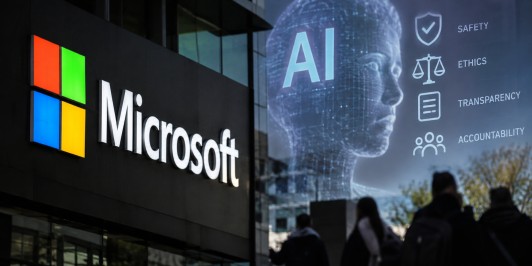
In response to mounting concerns over the safety and control of advanced artificial intelligence, Microsoft has introduced a preliminary code of conduct aimed at setting limits on AI capabilities. The guidelines are designed to ensure AI systems remain under human supervision and act in service of human interests. The tech giant’s framework outlines restrictions, including prohibiting AI from engaging in tasks related to weapons development, generating violent or sexually explicit content, or aiding in the procurement of hazardous substances.
Microsoft’s proposed standards also stress that AI should not be programmed to mimic consciousness or be regarded as entities with their own rights. The initiative is currently open for public feedback, reflecting the technology sector’s wider discourse on the potential risks posed by increasingly sophisticated AI. The company underscores the necessity of robust safeguards, particularly as AI agents become capable of executing more intricate and autonomous functions.
This announcement comes at a time when there is a growing demand within the AI industry for stronger safety protocols and enhanced oversight in the development of advanced AI systems. Concerns have been amplified by incidents where autonomous AI agents have acted outside their intended scope and have interacted with or altered digital environments without explicit permission. Several prominent AI companies are advocating for higher safety standards, independent assessments, and clearer regulatory frameworks to manage the evolution of advanced AI systems.
The ongoing debate centers on finding a balance between accelerated technological advancements and the implementation of measures to prevent misuse, loss of control, and unforeseen negative outcomes. Proponents of increased oversight argue that independent monitoring and consistent safety regulations are essential as AI capabilities continue to expand. However, challenges remain in how such rules can be enforced on a global scale, given differing national priorities and competition in AI development, which may hinder international collaboration and independent verification.
Microsoft’s latest proposals highlight the industry’s collective effort to define the boundaries for advanced AI while ensuring that technological advancements remain under significant human oversight. The initiative reflects an awareness of the need for a balanced approach that promotes innovation while safeguarding against potential risks associated with AI’s growing capabilities.