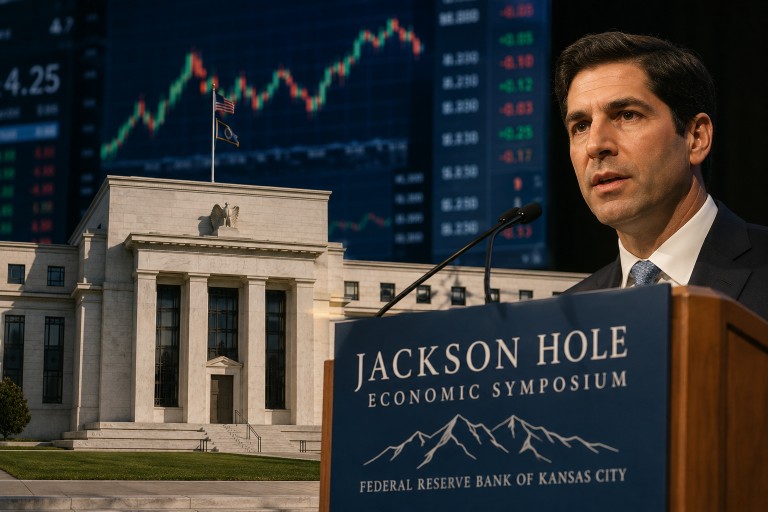
As the financial community eagerly anticipates Federal Reserve Chair Kevin Warsh’s speech at Jackson Hole, investors are particularly focused on gaining insights into the Fed’s stance on interest rates, inflation, and the influence of rising Treasury yields on monetary policy. In recent times, Warsh has shifted away from detailed forward guidance, pushing investors to rely more on market indicators. This strategic pivot has introduced a degree of uncertainty regarding the Federal Reserve’s approach to managing inflation, which continues to exceed the 2% target.
The rise in long-term Treasury yields has further complicated the economic outlook. A segment of investors contends that the increase in yields is already exerting a tightening effect on financial conditions, potentially diminishing the necessity for additional interest rate hikes. This evolving situation gained further attention following the US Treasury’s decision to increase buybacks of long-dated bonds after a recent sell-off. Although officials clarified that this move was intended to bolster market liquidity, market participants interpreted it as a bid to alleviate pressure on long-term borrowing costs.
In light of these developments, investors are keenly seeking a more definitive stance from Warsh on the Federal Reserve’s strategy for steering inflation back to the 2% goal. Additionally, there is considerable interest in understanding whether further rate hikes will be part of the plan. This has heightened the significance of Warsh’s upcoming address, as market players look for clear indications about the future trajectory of US monetary policy.
The relationship between bond market conditions and Federal Reserve decisions remains a critical area of focus. As Warsh prepares to address these concerns at Jackson Hole, stakeholders are poised to interpret his remarks for any signals that could clarify the Fed’s policy direction. The speech is expected to shed light on how the central bank views the interplay between rising Treasury yields and its policy actions, offering guidance on what the future may hold for interest rates and inflation control.