
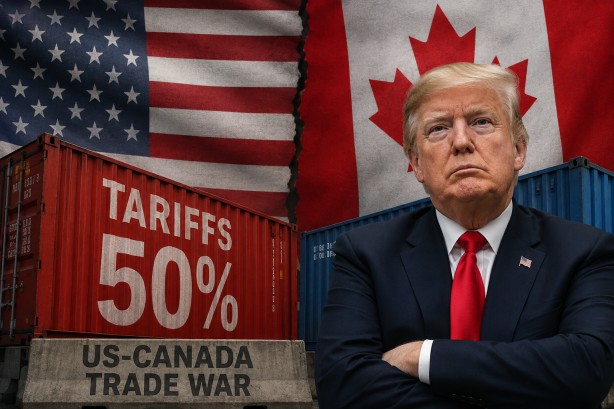
The trade tensions between the United States and Canada have intensified following unsuccessful negotiations in Washington, with President Donald Trump ramping up the dispute by implementing significant tariffs. The U.S. administration has announced a 50% tariff on approximately $20 billion worth of Canadian imports, which includes items such as hockey sticks and medical supplies, reflecting a sharp escalation in trade hostilities.
In response to this aggressive move, Canadian Prime Minister Mark Carney has pledged a retaliatory strategy, promising to introduce equivalent tariffs on American goods starting September 8. Carney has criticized the U.S. actions, characterizing them as an assault on Canadian interests, and has firmly rejected the conditions proposed during the recent negotiations. His stance underscores a commitment to defend Canada’s economic sovereignty amid the ongoing trade row.
On the U.S. side, Jamieson Greer, the U.S. Trade Representative, has justified the imposition of tariffs as a protective measure aimed at safeguarding American workers and maintaining the integrity of domestic supply chains. This perspective highlights the U.S. administration’s focus on prioritizing national economic interests, despite the potential fallout from escalating trade tensions with one of its closest trading partners.
The latest developments have sparked concerns regarding the stability of the United States-Mexico-Canada Agreement (USMCA), a pivotal trade pact that facilitates roughly $2 trillion in annual trade among the three nations. The discord threatens to undermine this crucial agreement, potentially leading to higher costs for businesses and consumers on both sides of the border and further straining the economic ties between the U.S. and Canada.