
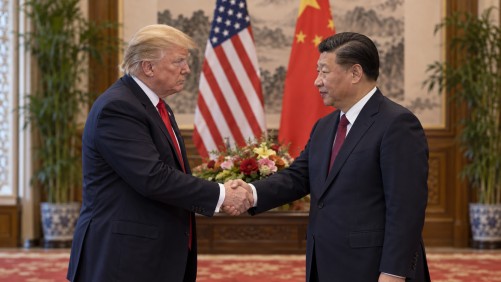
As tensions between the United States and China continue to simmer over trade, technology, and geopolitical issues, Presidents Donald Trump and Xi Jinping are preparing to meet once again on American soil. This face-to-face encounter marks their second meeting this year, yet expectations remain tempered given the complex and unresolved matters between the two nations.
Artificial intelligence stands out as a focal point in the ongoing discussions. The United States has proposed establishing a framework for dialogue with China on AI safety and governance, reflecting mutual interest in the burgeoning technology. However, divergent perspectives on AI development and security risks persist. The U.S. has imposed restrictions on Chinese access to advanced semiconductors crucial for AI, a move Beijing views as an attempt to stifle its technological advancement.
Trade relations also present a challenging landscape. A temporary trade agreement, which includes tariffs and restrictions on China’s rare-earth exports, is nearing its expiration in November. While Beijing aims for a more stable trade environment, the U.S. continues to leverage trade restrictions as a negotiating tool. This dynamic underscores the ongoing strategic rivalry between the world’s two largest economies.
Another significant area of contention is Taiwan. The U.S. maintains a longstanding defense relationship with Taiwan, a stance that conflicts with China’s view of the island as part of its territory. U.S. arms sales to Taiwan remain a sensitive issue, with potential implications for the bilateral dialogue between Trump and Xi.
Beyond these core topics, the two leaders are likely to address broader international concerns, including the situations in Iran and Ukraine. China’s economic ties with Iran and its close relationship with Russia add layers of complexity to these discussions, as both nations navigate their roles on the global stage.
This meeting serves as a critical juncture for Washington and Beijing to manage their strategic rivalry while ensuring open lines of communication on issues that carry significant implications for global trade, technology, and security.