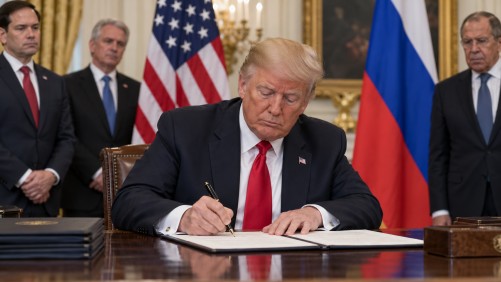
In a recent executive order, President Donald Trump has decided to waive crucial sanctions and tariffs aimed at Russia, which were set to be enforced under a legislative act he signed last month. The legislation, named the Lindsey O. Graham Sanctioning Russia and Iran Act of 2026, was intended to increase economic pressure on Russia for its invasion of Ukraine. It included provisions for tariffs up to 100% on imports from major buyers of Russian oil and natural gas and penalties on nations aiding Russia in circumventing existing sanctions.
Trump justified the waiver by stating that it serves the national interests of the United States. This decision allows for the suspension of these measures until Trump or other authorized officials deem further action necessary. The legislation provides the president the authority to halt the sanctions by notifying Congress that it is in the national interest to do so.
The move has sparked criticism amid ongoing scrutiny of Trump’s approach to Russia and Ukraine, particularly given the warmer relations his administration has maintained with Moscow and public disagreements with Ukrainian President Volodymyr Zelenskyy. Critics, including Democratic lawmakers, argue that waiving these sanctions undermines efforts to hold Russia accountable for its actions against Ukraine.
The sanctions had raised concerns among countries like China and India, which are significant purchasers of Russian oil, fearing the impact on international trade and bilateral relations. Trump’s decision follows controversy surrounding a separate diesel supply agreement with Russia, which he defended as a measure to boost fuel supplies and stabilize global energy prices. Critics worry this could inadvertently increase revenue for Moscow.
This suspension injects uncertainty into the timeline and eventual implementation of the new sanctions and tariffs. As Washington continues to navigate the delicate balance between pressuring Russia and managing global energy costs and international economic relations, it remains unclear when, or if, these measures will be enacted.