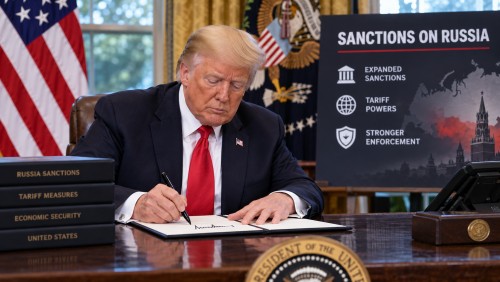
In a move to intensify economic pressure on Russia amid ongoing geopolitical tensions, the United States has expanded its sanctions targeting Moscow while also extending measures on Iran. The White House announced that President Donald Trump signed into law a new package that strengthens the U.S. government’s ability to impose financial penalties, aiming to curb Russia’s revenue from oil and gas exports.
The legislation, which received bipartisan support in the House of Representatives, grants the president the authority to levy tariffs of up to 100% on nations that continue purchasing Russian energy. This expansion of powers is part of a broader strategy to disrupt financial networks and entities linked to Russia’s military operations. The law also gives the president the discretion to decide which countries will be targeted and whether any sanctions can be waived.
These new measures come at a time when Russian energy exports remain crucial to several major economies, including India and China. The potential imposition of tariffs on these nations could significantly impact global energy markets, depending on how the Trump administration chooses to apply the new rules.
While the primary focus is on diminishing Russia’s financial capabilities, the legislation also extends existing sanctions on Iran, maintaining pressure on Tehran over its contentious activities. The dual approach underscores Washington’s commitment to using economic tools as leverage in its foreign policy.
The White House emphasized the importance of this legislative action, highlighting its role in strengthening the U.S. position against adversarial regimes. As the administration moves forward, the global community will be watching closely to see how these expanded sanctions and tariffs will be implemented and what ripple effects they may have on international relations and trade.