
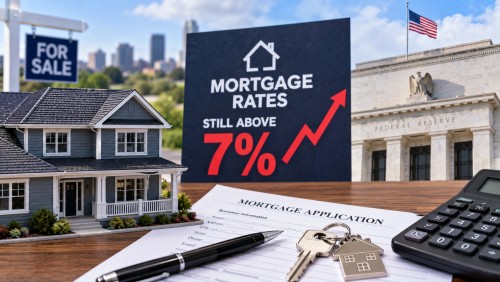
The housing market in the United States continues to grapple with high borrowing costs as mortgage rates remain elevated above 7%. This development follows the Federal Reserve’s recent decision to increase its target interest-rate range to 3.75%–4%, a move aimed at addressing inflation that persists above the Fed’s 2% target.
Despite the Federal Reserve’s policy changes, mortgage rates do not directly track the central bank’s decisions. Influenced by a broader array of factors including financial markets, investor demand, and inflation expectations, the average interest rates for home loans have risen significantly over the past several months. As of September 17, 2026, the average rate for a 30-year fixed mortgage stood at 7.37%, up from 5.75% in March. The 15-year mortgage rate averaged 6.62% at the same point.
Prospective homebuyers are finding it increasingly costly to finance home purchases, although there are avenues to potentially secure lower rates. Factors such as a borrower’s credit score, down payment size, chosen lender, and specific loan terms can influence the final rate offered. Additionally, paying mortgage points upfront can lower interest rates, albeit increasing the initial costs at closing. Borrowers also have the option of adjustable-rate mortgages, which offer initial lower rates that adjust later based on market conditions.
The situation is similarly challenging for those considering refinancing. The average rate for a 30-year refinance hit 7.41%, while the 15-year refinance rate was 6.75% as of mid-September. Homeowners with existing loans at significantly lower rates might find refinancing less appealing unless the financial benefits clearly outweigh the costs involved.
Looking ahead, the trajectory of mortgage rates will hinge on various factors, including inflation trends, economic conditions, and financial market dynamics. While some may hope for a decrease, the potential for rates to decline remains uncertain, and waiting for lower rates comes with no guarantees.