
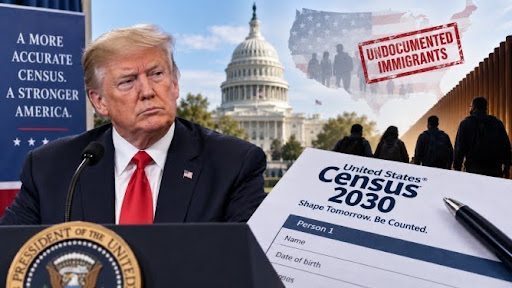
The Trump administration has put forward a proposal that seeks to modify the US census by excluding undocumented immigrants from being counted. This change could have a considerable impact on the allocation of federal resources and the configuration of congressional districts throughout the nation. According to the proposal, while lawful permanent residents would still be included in the census count, undocumented immigrants along with individuals in certain non-permanent immigration categories might be left out. The plan involves the Census Bureau potentially utilizing government administrative records to ascertain the legal status of individuals counted in the census.
Typically conducted every decade, the US census has traditionally aimed to count every person residing in the country, without regard to their citizenship or immigration status. The data collected is crucial as it determines the distribution of federal funding and influences how many seats each state is allocated in the House of Representatives. Any deviation from counting all residents could therefore lead to significant shifts in representation and resource distribution.
Additionally, the administration is evaluating possible revisions to questions concerning race and ethnicity on the census. These considerations are driven by concerns about the relevance and sensitivity of such information. Should these modifications be implemented, they could alter the demographic data that governments and policymakers rely on for various decisions and strategies.
However, the proposed changes are anticipated to face legal opposition, primarily from Democrats and advocacy groups. Critics argue that the Constitution mandates a comprehensive count of all individuals residing in the United States, regardless of their immigration status. These groups are likely to challenge the proposal in court, asserting that it contravenes constitutional requirements and could lead to skewed representations of communities across the country.