
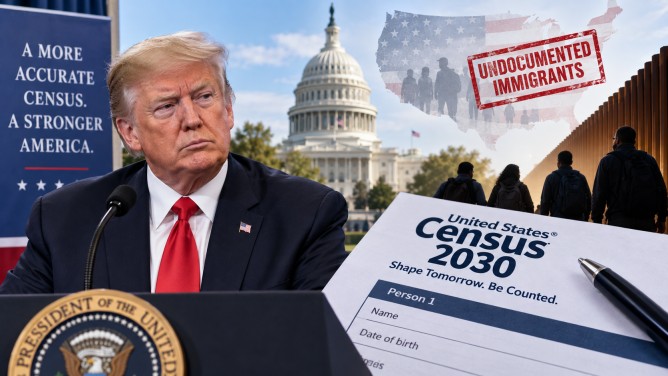
The Trump administration has introduced a proposal that aims to alter the way the US census counts the population by excluding undocumented immigrants. This change could have major implications on how federal resources are distributed and how congressional districts are drawn across the nation. While lawful permanent residents would remain included in the count, the proposal suggests excluding undocumented immigrants along with certain other non-permanent immigration categories. The Census Bureau is exploring the use of government administrative records to ascertain the legal status of individuals for the census.
Historically, the US census, conducted every decade, has counted every person residing in the country, irrespective of their citizenship or immigration status. These population counts are crucial in determining federal funding allocations and in deciding how many seats each state holds in the House of Representatives. The proposed changes could potentially shift the balance of resource distribution and political representation if implemented, altering the landscape significantly.
In addition to these changes, the administration is contemplating revisions to the census questions about race and ethnicity. The rationale behind this consideration is concerns regarding the effectiveness and sensitivity of the current questions. These potential changes could impact demographic data that governments and policymakers rely on for decision-making processes.
The proposal is likely to face significant legal opposition, particularly from Democrats and advocacy groups. These opponents argue that the Constitution mandates the census to include all people living within the United States, regardless of immigration status. Legal battles are anticipated as this proposal moves forward, with challengers preparing to defend the longstanding practice of an inclusive count.