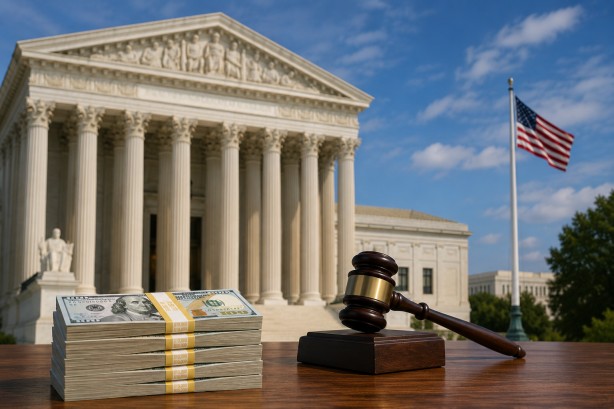
The United States government has issued refunds totaling $81 billion in tariffs to businesses, following a Supreme Court ruling that determined a substantial portion of tariff measures imposed during former President Donald Trump’s administration were illegal. These refunds, occurring within the current fiscal year, mark a significant increase compared to the $5 billion returned in the same timeframe last year. The court’s decision necessitated the repayment of import duties paid by companies under the invalidated tariffs, with most of the refunds distributed in May and June, according to figures from the Treasury budget.
This reimbursement has played a role in the expansion of the federal budget deficit, which climbed to $1.367 trillion over the first nine months of the fiscal year. Additional financial pressures have arisen from growing interest payments on the national debt and increased military expenditures, further contributing to the government’s fiscal challenges.
Despite the Supreme Court’s ruling, the Trump administration is in the process of planning a new series of tariffs aimed at addressing issues related to trade practices, industrial overcapacity, and the enforcement of anti-forced labor laws in various countries. The proposed tariff rates are anticipated to fall between 10% and 12.5%, with further duties being considered for several of the United States’ major trading partners.
These developments come as the U.S. navigates complex international trade dynamics, striving to balance domestic economic interests with global trade relations. The potential introduction of new tariffs reflects ongoing concerns over unfair trade practices and the need to protect American industries from perceived competitive disadvantages. As the government moves forward with these plans, businesses and trading partners alike will be closely monitoring the implications for international trade and economic policy.