
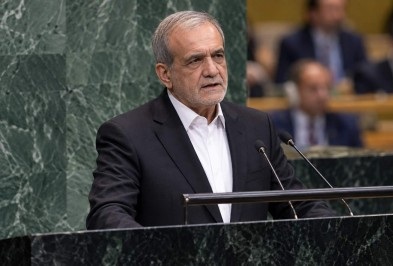
Tensions between the United States and Iran have been mounting, with the potential for further diplomatic engagement remaining on the horizon. Amid heightened scrutiny at the United Nations General Assembly, Iranian President Masoud Pezeshkian expressed Tehran’s willingness to engage in dialogue, though he firmly criticized U.S. President Donald Trump for what he termed as threats and military pressure.
In his UN address, President Pezeshkian emphasized Iran’s readiness for diplomatic negotiations while firmly rejecting any talks that occur under coercion. His comments came shortly after President Trump indicated that the U.S. might implement additional measures against Iran, even as both nations explore possibilities for renewed discussions.
On the sidelines of the General Assembly, a significant meeting took place between Iranian Foreign Minister Abbas Araghchi and U.S. special envoy Steve Witkoff. The three-hour discussion, facilitated through Qatari mediation, concentrated on Iran’s stipulations for resolving ongoing conflicts and alleviating the economic pressures on the nation.
Central to these discussions is the strategic Strait of Hormuz, a critical passage for global shipping and energy supplies. Iran has signaled that it could reopen the waterway if its conditions, including the cessation of military and economic pressure, are met. Tehran’s requirements also involve lifting the naval blockade, ending hostilities, and the release of its assets.
Pezeshkian reiterated Iran’s commitment to a peaceful nuclear program, asserting that the nation does not aspire to develop nuclear weapons. He called for regional security collaborations, urging neighboring countries to reduce reliance on external powers. Meanwhile, he accused the U.S. and Israel of aggressive actions, framing Iran’s responses as self-defense amid escalating economic sanctions and oil export challenges.
The ongoing diplomatic exchanges underscore the complexities and potential for dialogue between Washington and Tehran, despite deep-seated disagreements over the nuclear issue, sanctions, and regional stability. The future of these negotiations could significantly impact international relations and energy markets, reflecting the broader geopolitical dynamics at play.