
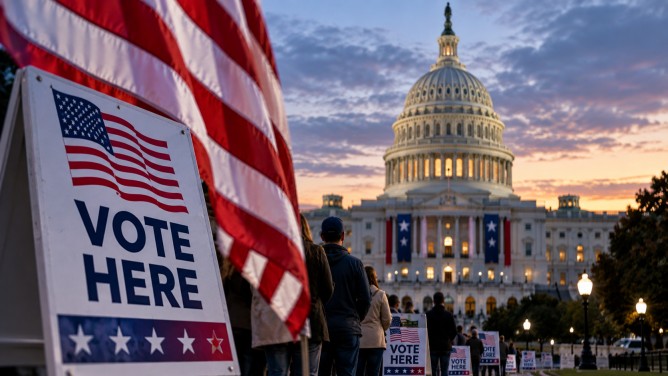
As the 2026 U.S. midterm elections approach a pivotal stage, the political landscape is heating up. Republicans are striving to defend their control of Congress, while Democrats aim to leverage President Donald Trump’s declining approval ratings and the ongoing inflation issues to gain ground. The campaign trail is expected to become more intense after Labor Day, with the countdown to the November 3 vote ticking down to just about two months. Recent polls indicate strong competition from Democratic candidates in several critical House and Senate races, prompting election analysts to adjust their forecasts in favor of the Democrats in some instances.
Historically, midterm elections have often resulted in losses for the president’s party, as they serve as a referendum on the current administration’s performance. This trend presents a significant hurdle for Republicans, who are working to maintain their congressional majority amidst a challenging political climate. Economic concerns, particularly regarding inflation, alongside opposition to Trump’s policies, are central to the Democratic strategy to mobilize voters. Yet, Trump and Republican leaders remain optimistic about their chances to counteract these historical patterns and keep their hold on Congress.
Financially, Republicans are in a strong position. Political groups aligned with Trump have amassed substantial resources to back their candidates, and the redistricting efforts by Republican-led states could help safeguard some seats. This financial clout and strategic redistricting are seen as crucial advantages for the Republicans as they face a potentially volatile election year.
The 2022 midterm elections serve as a recent reminder of the unpredictability of political momentum. Despite expectations of significant Republican gains due to high inflation and dissatisfaction with the Democratic administration, Democrats exceeded expectations. The Supreme Court’s decision to overturn the constitutional right to abortion galvanized Democratic voters, helping to mitigate Republican advances. This historical context underscores the potential for unforeseen developments to sway electoral outcomes.
With Trump actively participating in the midterm campaign from the White House, both Democrats and Republicans are gearing up for a tightly contested election. The results could profoundly influence the trajectory of Trump’s administration as it enters its concluding two years. As the election battle enters its final phase, the stakes are high, with both parties eager to sway voters and shape the future political landscape.