
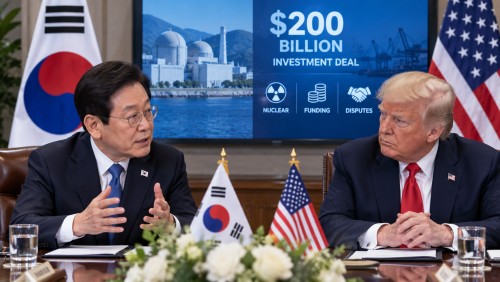
Amid ambitious plans for a $200 billion investment commitment by South Korea in the United States, negotiations have hit a snag due to unresolved differences over nuclear projects, investment risks, and funding schedules. These complexities threaten to delay the formalization of the agreement, which includes significant nuclear energy initiatives.
The core of the disagreement lies in the selection of nuclear reactor designs for eight planned reactors in the U.S. While six reactors are proposed to use Westinghouse’s AP1000 technology, South Korea wishes to utilize its APR1400 design for two reactors. This choice has been met with resistance from U.S. officials and Westinghouse, complicating the completion of the nuclear package. South Korea is expected to invest around $120 billion in nuclear-related projects, highlighting the substantial stakes involved.
Adding to the tension, South Korea is seeking a 15% to 20% stake in Westinghouse, including voting rights and a board seat. Westinghouse, however, prefers to restrict Seoul’s ownership to below 10%. This ownership dispute underscores broader concerns about control and influence over the projects.
Financial considerations further complicate the negotiations. The U.S. has requested a more than $9 billion contribution from South Korea by the end of the year, whereas Seoul had initially planned to start with a smaller investment in 2026, ramping up contributions thereafter. Additionally, there is disagreement on how to calculate investment returns, with South Korea advocating for a model where profits from successful projects offset losses from others, contrary to the U.S. preference for project-specific accounting.
Other potential areas of collaboration include South Korea’s involvement in a U.S. project for processing spent nuclear fuel and a proposed liquefied natural gas project in Alaska. However, concerns over costs and long-term profitability remain.
Despite these challenges, both governments are committed to continuing negotiations, as confirmed by South Korea’s Industry Ministry. They emphasize that no final decisions have been made regarding the specifics of the projects, funding structures, or investment arrangements, keeping the door open for resolution and agreement.