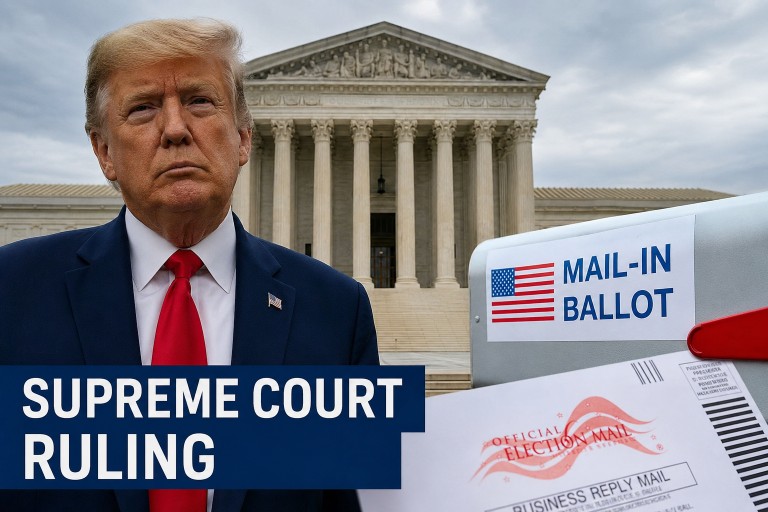
In a recent decision, the US Supreme Court has permitted the Trump administration to proceed with certain aspects of its executive order concerning mail-in voting, following the removal of an injunction imposed by a lower court. The court’s ruling, which passed with a 6-3 vote, lifted one injunction that had previously blocked the order, although another nationwide injunction still remains in effect. The justices emphasized that their decision does not imply that any future actions undertaken as part of the order will necessarily be lawful.
The executive order in question, issued by former President Trump, mandates the government to compile a list of eligible voters based on citizenship. It also introduces a series of measures related to the distribution of mail-in ballots and the enforcement of federal election regulations. This directive has faced opposition from states led by Democrats, who argue that the Constitution entrusts states and Congress with the primary responsibility for managing election procedures.
Critics of the order have expressed concerns that implementing these changes before the upcoming November midterm elections could lead to disruptions in voting preparations and potentially impact voter access. As a result, the executive order has been met with legal challenges from various quarters, highlighting the ongoing debate over the balance of power between federal and state authorities in election management.
Despite the Supreme Court’s current decision, the broader legal contest over the executive order is far from resolution. The administration has been given the green light to continue developing its policies under the order, although further judicial scrutiny and potential challenges are anticipated as the situation evolves.