
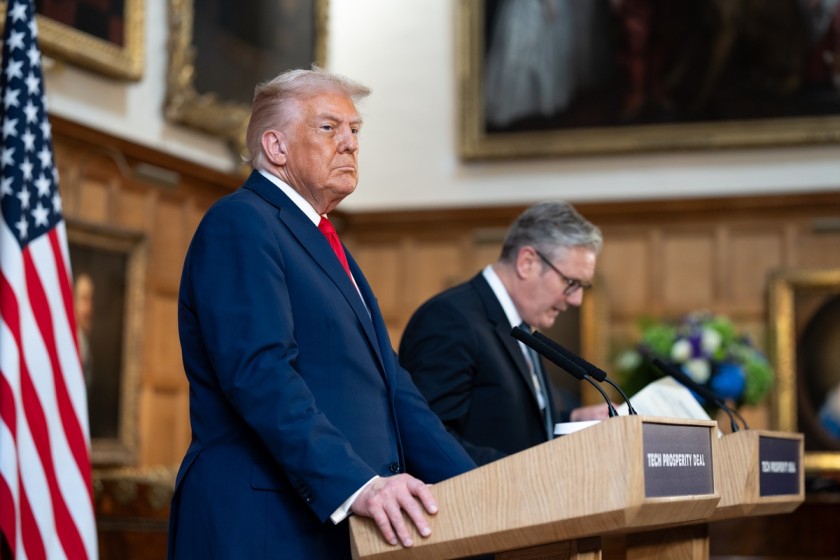
In a recent post on Truth Social, former US President Donald Trump asserted that British Prime Minister Keir Starmer is on the brink of resigning, pointing fingers at his handling of immigration and energy matters. Trump criticized Starmer’s performance, particularly highlighting his perceived failures in managing immigration policies and advocating for increased development of North Sea oil resources. Despite his criticisms, Trump expressed his well wishes to the British leader.
These statements emerge amidst a backdrop of mounting political pressure on Starmer, with reports circulating that some within the Labour Party are questioning his leadership capabilities. This internal scrutiny has been amplified by the results of a recent parliamentary election, which enhanced the profile of one of Starmer’s political adversaries. This has sparked renewed discussions regarding the future strategy and direction of the Labour Party.
Trump’s commentary coincides with a time of heightened international focus on political developments, as world leaders grapple with significant geopolitical issues. The ongoing tensions in the Middle East are among the major challenges currently capturing global attention, adding another layer of complexity to the international political landscape.
As Starmer navigates these political challenges, both domestically and internationally, the Labour Party’s internal dynamics continue to evolve. The party’s trajectory remains under the spotlight, with its leadership and policy decisions being scrutinized by both supporters and critics. The implications of Trump’s remarks may further influence the discourse surrounding Starmer’s leadership and the broader political context in the UK.